

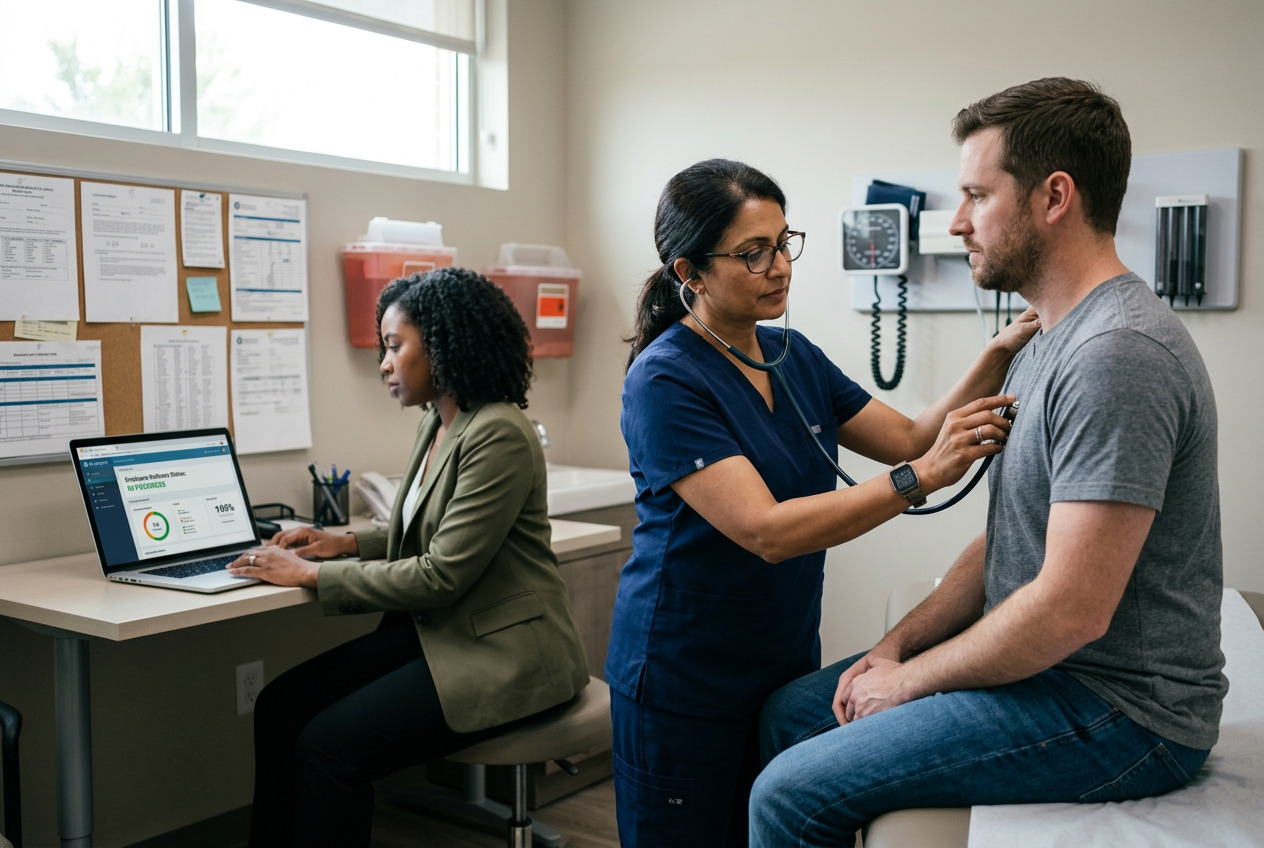
Employee physicals management directly affects how quickly organizations can hire, place, and redeploy workers. When scheduling is slow, evaluations are incomplete, or results are difficult to retrieve, a routine occupational health requirement can become an operational bottleneck.
A structured process connects clinical requirements with workforce timelines. Clear orders, coordinated scheduling, complete evaluations, and reliable result access can reduce administrative effort while supporting workforce readiness and regulatory compliance.
Scheduling Gaps Delay Deployment
A delay can begin when an employee receives unclear instructions, cannot find a timely appointment, or is sent through multiple scheduling handoffs. HR teams may spend hours following up while operations leaders plan around a start date that remains uncertain.
Central coordination helps ensure the employee knows where to go, what to bring, and when the evaluation must be completed. Time-sensitive roles also need a defined escalation path when an appointment changes.
Incomplete Evaluations Create Repeat Work
An appointment does not guarantee completion. The wrong service may be ordered, job information may be missing, or a required follow-up may remain unresolved. Each gap can trigger another call, visit, or document request.
Role-based protocols can reduce rework by aligning the physical with job duties and applicable requirements. Consistent instructions across HR, safety, operations, and clinical teams make it easier to complete the right evaluation the first time.
Slow Results Reduce Visibility
After the examination, decision-makers still need timely, appropriate access to status and results. Without a reliable system, teams may not know whether an item is awaiting clinical review, missing documentation, or ready for the next step.
Technology such as the Shield Employer Portal can support a more transparent workflow for authorized users. Better visibility helps organizations identify where a case is stalled and respond without unnecessary back-and-forth.
Operational Costs Accumulate Quickly
Unfilled shifts, postponed assignments, and delayed onboarding can affect production and service schedules. Existing employees may carry extra workload, while administrative teams spend more time reconciling information across emails, calls, and separate records.
The impact can be larger for safety-sensitive organizations operating across locations or managing recurring medical surveillance. A scalable process should support both individual cases and higher-volume workforce needs.
Create a Dependable Screening Workflow
Map each step from the order to final status. Assign ownership for scheduling, employee communication, clinical follow-up, and result review. Standardize role requirements, verify complete orders, and monitor turnaround times and repeat appointments. Use a central system so authorized teams can see progress and recurring delay patterns.
The objective is not simply to shorten the appointment. It is to build a predictable occupational health screening process that supports safe, compliant, and timely workforce deployment.
Make Workforce Readiness More Predictable
Well-managed employee physicals reduce uncertainty across hiring and operations. With physician-led governance, coordinated processes, and accessible technology, organizations can limit avoidable downtime and keep workforce health requirements aligned with business needs.
Strengthen Your Workforce with Workplace Safety Screenings
From pre-employment screenings to injury management and ongoing medical surveillance, Workplace Safety Screenings delivers the clinical expertise and systems you need to protect your people and your operations. Let us help you build a safer, more compliant workplace with confidence. 📞 Call us at (855) 572-5577, 📧 email info@workplacesafetyscreenings.com or through our social media channels (X, Facebook, and LinkedIn) to connect with our team today. Let’s build a stronger workforce together.