


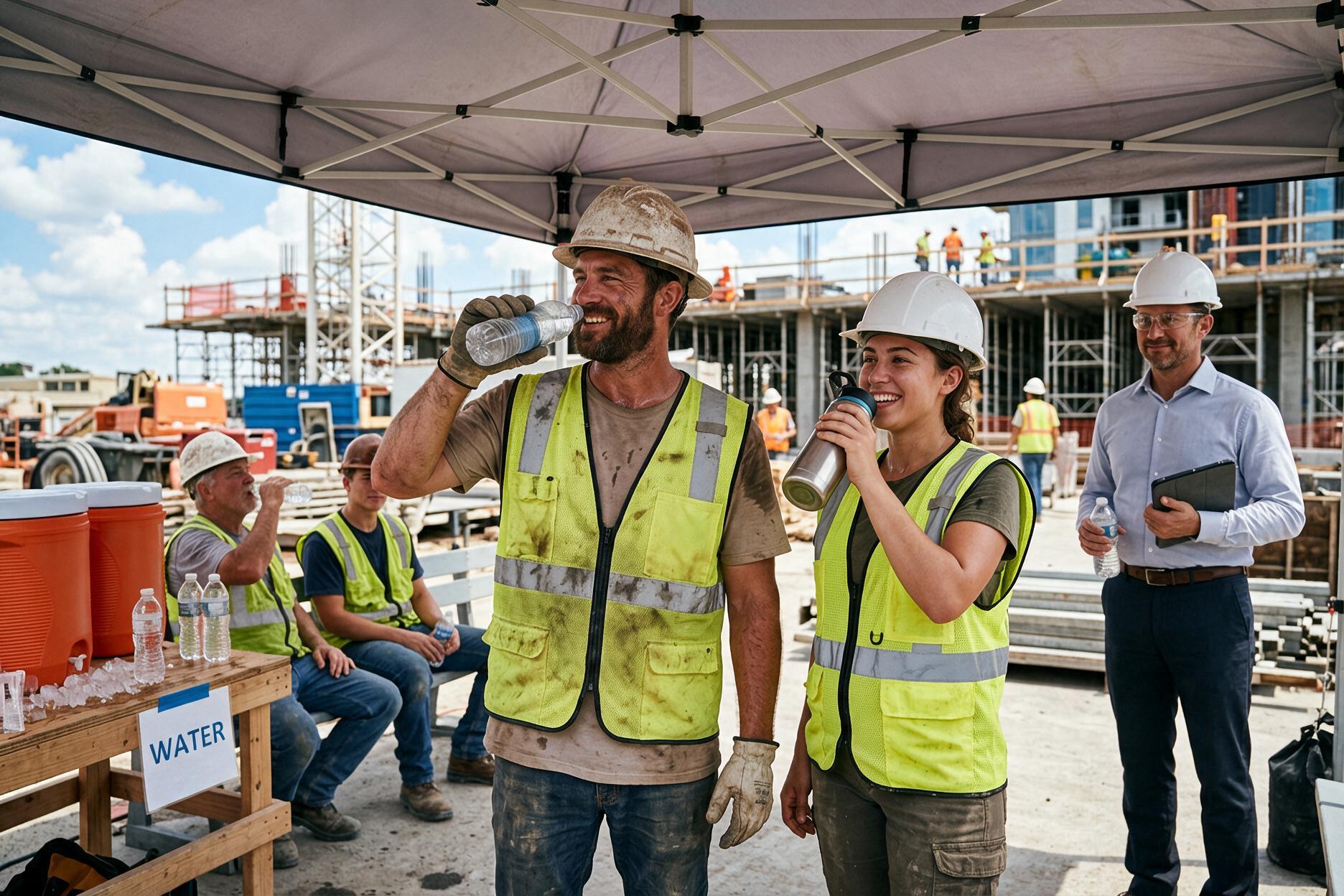
Heat stress prevention helps organizations protect outdoor workers while maintaining steady operations during high summer temperatures. In construction, logistics, manufacturing, and oil and gas environments, heat can affect attention, endurance, and the ability to work safely.
An effective approach integrates workforce health, supervision, scheduling, and clear response procedures. Prevention works best when it is planned as part of daily operations rather than treated as an interruption after symptoms appear.
Plan Work Around Heat Exposure
Review the day’s conditions, the intensity of assigned tasks, required protective equipment, and the time workers will spend in direct sun or hot environments. Use that assessment to determine when added precautions or schedule adjustments are appropriate.
Where operations allow, place demanding tasks during cooler periods, rotate assignments, and stage tools or materials to reduce unnecessary exertion. Thoughtful sequencing can protect workers without sacrificing the day’s essential output.
Support Hydration, Rest, and Recovery
Workers need practical access to drinking water and recovery areas. Supplies should be easy to reach, and supervisors should reinforce regular hydration rather than waiting until someone feels unwell.
Provide suitable shaded or cooled recovery space and make breaks workable within the production plan. Short, planned recovery periods can be easier to manage than an emergency that removes a worker and disrupts an entire crew.
Build Acclimatization into Staffing
New workers, returning workers, and employees moving into hotter assignments may need time to adjust. A gradual increase in exposure and workload can help supervisors observe how individuals are responding.
Coordinate staffing so experienced team members can support newer employees and so production expectations reflect the adjustment period. This is especially important when a heat event arrives suddenly or a project begins during peak summer conditions.
Train Supervisors to Recognize and Respond
Supervisors should know common warning signs of heat-related illness and the organization’s response process. Workers should also be encouraged to report symptoms in themselves or coworkers without delay.
Define who contacts clinical or emergency support, who secures the work area, and how the event will be documented. Clear roles reduce hesitation and help the organization respond consistently when time matters.
Use Data to Improve the Program
Track heat-related concerns, first-aid events, missed work, high-risk tasks, and recurring locations. Review patterns with safety, operations, HR, and occupational health partners to identify practical improvements.
Technology and organized workforce-health processes can support documentation and follow-up. The goal is a repeatable system that connects prevention, clinical guidance, injury management, and operational learning.
Protect People and Performance Together
Heat stress prevention and productivity do not have to compete. Advance planning, accessible hydration, realistic recovery, acclimatization, trained supervisors, and reliable follow-up can reduce disruption while supporting a safer workforce.
Strengthen Your Workforce with Workplace Safety Screenings
From pre-employment screenings to injury management and ongoing medical surveillance, Workplace Safety Screenings delivers the clinical expertise and systems you need to protect your people and your operations. Let us help you build a safer, more compliant workplace with confidence. Call us at (855) 572-5577, email info@workplacesafetyscreenings.com or through our social media channels (Twitter, Facebook, and LinkedIn) to connect with our team today. Let’s build a stronger workforce together.